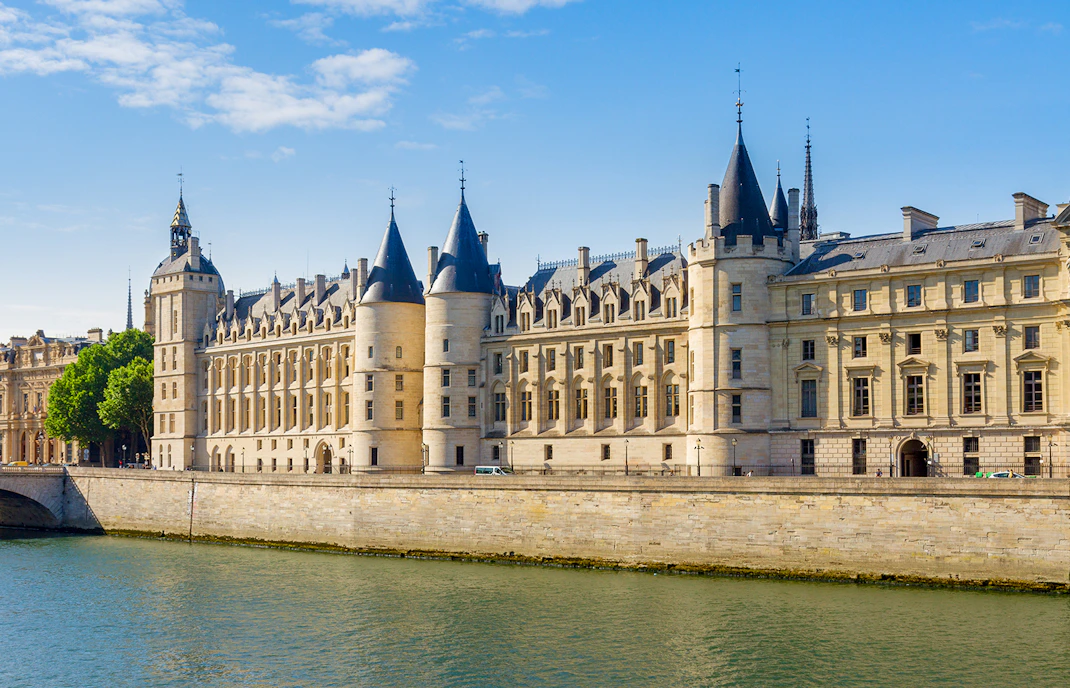
Conciergerie
1 min walk
This former royal palace and prison sits directly next to Sainte-Chapelle, allowing for a comprehensive view of the medieval Palais de la Cité.

The Conciergerie sits directly beside Sainte-Chapelle within the same historic palace complex on Île de la Cité. Both monuments occupy different sections of the former Palais de la Cité, medieval Paris's royal residence. Many visitors assume they are one building, but each requires a separate entrance and ticket.
Quick answer
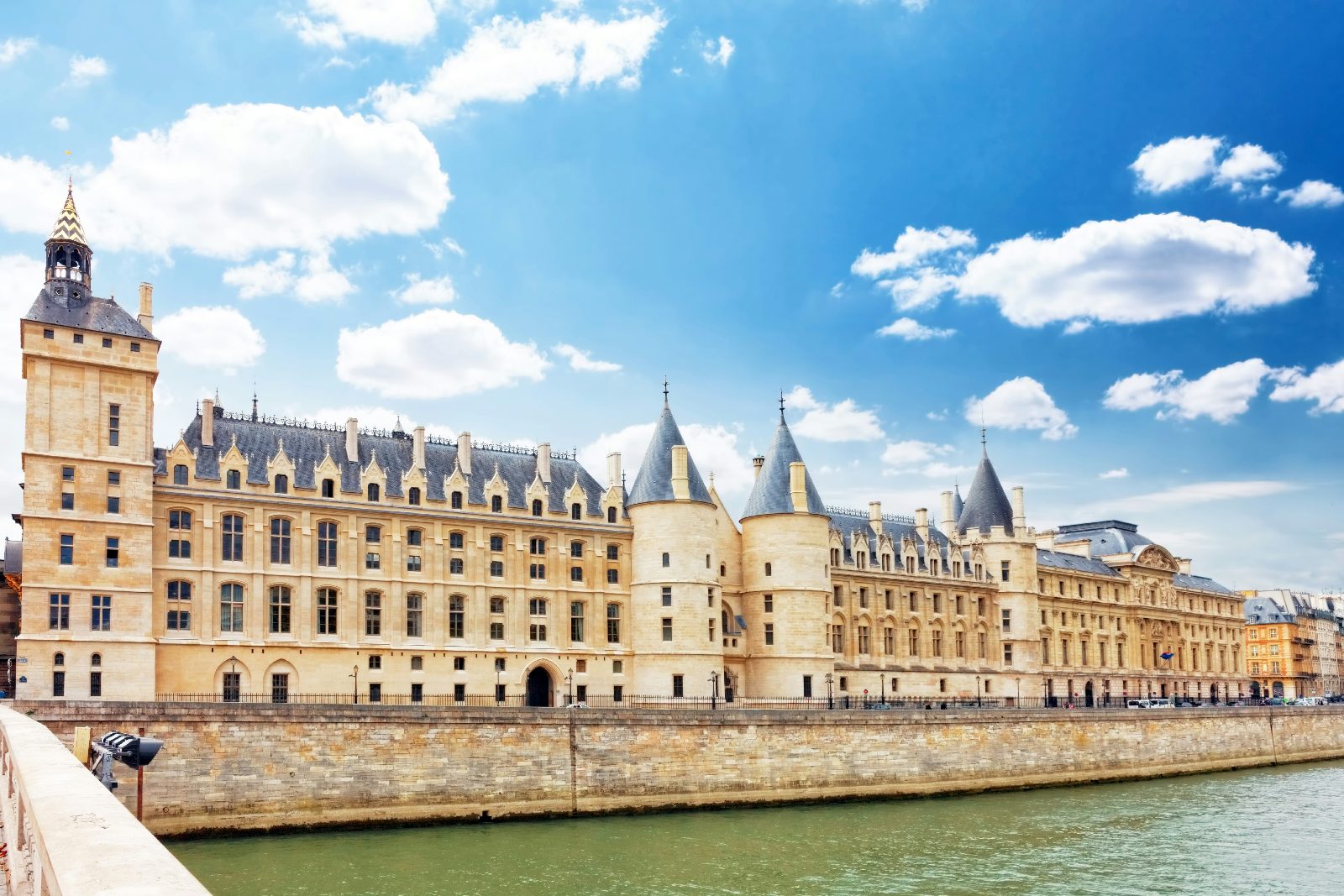
The Conciergerie is the neighboring medieval palace that shares the same courtyard complex with Sainte-Chapelle at 10 Boulevard du Palais. Both monuments occupy different wings of the original Palais de la Cité, the royal residence built in the 10th century. The Conciergerie later served as a Revolutionary prison, while Sainte-Chapelle remained a royal chapel. Today they operate as separate attractions with individual entrances, though combined tickets allow visitors to explore both Gothic structures in a single visit.
The fortress towers visitors see rising above Boulevard du Palais belong to the Conciergerie, not Sainte-Chapelle. Both monuments occupy the same medieval island site, but centuries of royal construction placed them in different sections of the vast palace complex. Understanding what is the Conciergerie at Sainte-Chapelle requires stepping back to the 10th century, when French kings built their primary residence on Île de la Cité. The Conciergerie formed the palace's administrative wing, housing the royal court's legal chambers and security apparatus. Sainte-Chapelle rose in the palace's eastern section two centuries later as Louis IX's private chapel, commissioned specifically to house relics acquired from Constantinople. The two structures shared courtyards and defensive walls but served entirely separate functions under the same roof of royal authority. After the monarchy abandoned the island for the Louvre in the 14th century, the Conciergerie transformed into a judicial prison. Its Gothic halls became holding cells during the Revolution, while Sainte-Chapelle continued as a state chapel and administrative archive. Visitors walking between the two monuments today cross the same courtyards that once connected medieval departments of a single palace, though modern security and ticketing treat them as distinct sites. The practical consequence of this shared-but-separate arrangement appears at the entrance. Each monument maintains its own ticket desk and queue line, positioned roughly 50 meters apart along the same courtyard perimeter. Combined tickets purchased in advance grant access to both without standing in two separate lines, but visitors still exit one building completely before entering the other. The walk between entrances takes under two minutes across open pavement. What is the Conciergerie at Sainte-Chapelle in functional terms? A former royal palace wing that now offers context for understanding the chapel's original setting within a working seat of power. The Conciergerie's vaulted halls show where palace officials conducted daily governance, while Sainte-Chapelle's stained glass represents the ceremonial height of that same medieval authority. Visiting both completes the picture of how French kingship operated from a single fortified island before Versailles existed.
“The two structures shared courtyards and defensive walls but served entirely separate functions under the same roof of royal authority.”
The Conciergerie and Sainte-Chapelle occupy the oldest surviving sections of the Palais de la Cité, the medieval seat of French royal power from the tenth century onward. King Louis IX commissioned Sainte-Chapelle in 1242 to house Christ's Crown of Thorns and other Passion relics acquired from the Latin Emperor of Constantinople. Pierre de Montreuil completed the chapel by 1248, creating a soaring reliquary of stained glass that served the royal household and visiting dignitaries. The Conciergerie, derived from the title of the palace's keeper, housed administrative offices, guard rooms, and ceremonial halls beneath the same complex. The Gothic Salle des Gens d'Armes, built under Philip IV around 1302, remains Europe's largest surviving medieval hall. Charles V abandoned the palace for the Louvre in 1370 after uprisings, and the Conciergerie transitioned into a judicial center and prison. The Parlement de Paris occupied the site, and the Conciergerie's dungeons gained notoriety during the French Revolution. Between 1793 and 1794, over 2,700 prisoners awaited trial by the Revolutionary Tribunal here, including Marie Antoinette, who spent her final weeks in a cell now reconstructed for visitors. Georges Danton and Maximilien Robespierre passed through the same corridors before execution. What is the conciergerie at sainte chapelle today reflects centuries of transformation. Sainte-Chapelle survived the Revolution as an archive, its relics scattered, but nineteenth-century restorations returned the windows to brilliance. The Conciergerie opened as a historical monument in 1914. Visitors encounter the original medieval kitchens with four massive fireplaces, the Salle des Gens d'Armes with its vaulted ceiling, and Marie Antoinette's reconstructed cell. The two monuments occupy opposite ends of the Boulevard du Palais courtyard, their shared origins visible in the medieval towers and walls that frame both entrances.
King Louis IX commissions Sainte-Chapelle to house relics of the Passion acquired from Constantinople.
Pierre de Montreuil completes Sainte-Chapelle, creating a two-story reliquary chapel with fifteen stained-glass windows.
Philip IV constructs the Salle des Gens d'Armes, a Gothic hall that becomes the Conciergerie's architectural centerpiece.
Charles V abandons the Palais de la Cité for the Louvre; the Conciergerie becomes a prison and judicial seat.
The Revolutionary Tribunal uses the Conciergerie to detain over 2,700 prisoners, including Marie Antoinette and Robespierre.
Architect Eugène Viollet-le-Duc leads restoration of Sainte-Chapelle's stained glass and spire after decades of neglect.
The Conciergerie opens to the public as a historical monument, preserving its medieval halls and Revolution-era cells.
Sainte-Chapelle and the Conciergerie form part of the same historical Palais de la Cité complex on the Île de la Cité. Visitors often pair these sites to experience both the royal religious architecture and the adjacent medieval judicial history in a single trip.
1 min walk
This former royal palace and prison sits directly next to Sainte-Chapelle, allowing for a comprehensive view of the medieval Palais de la Cité.
6 min walk
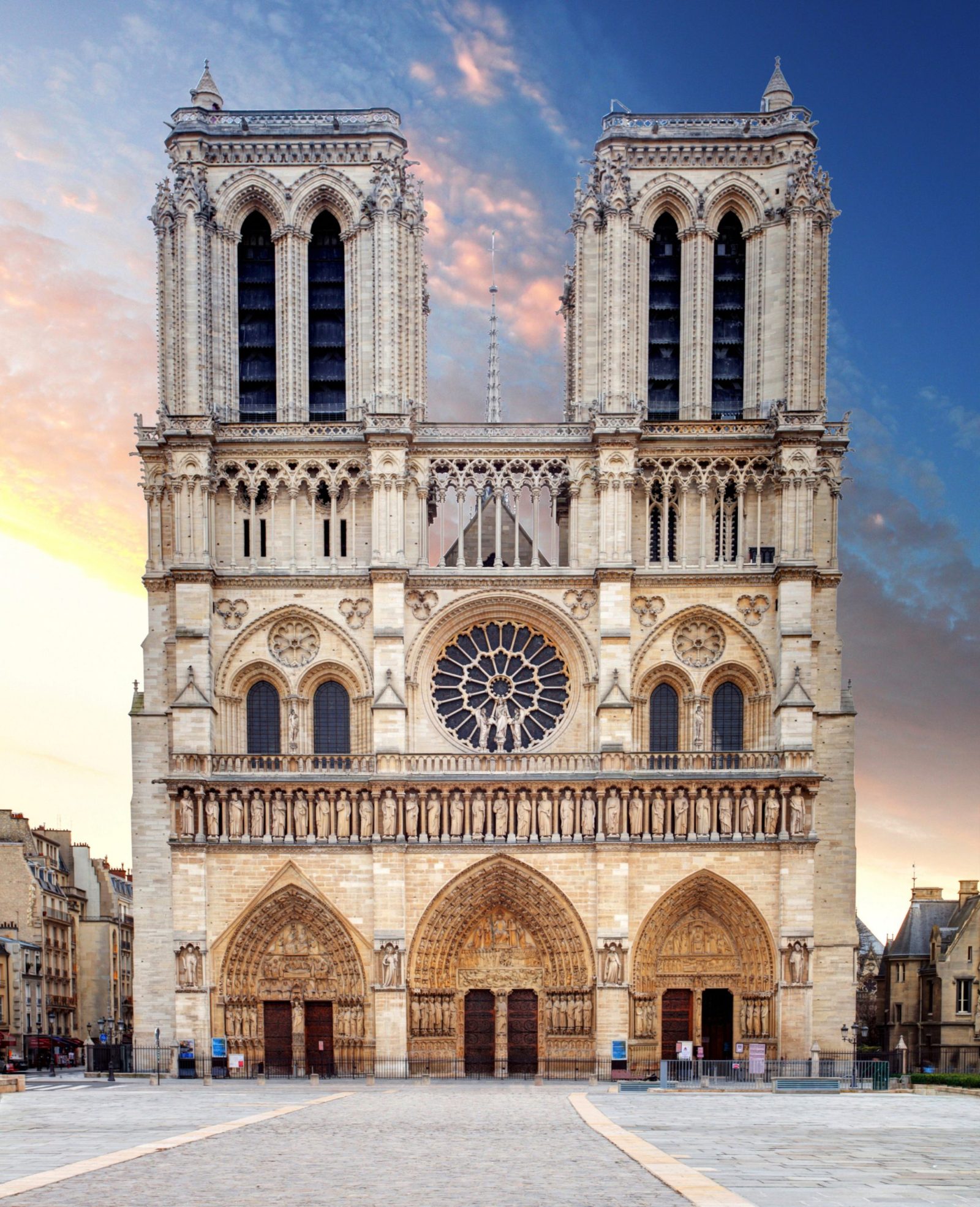
Located at the eastern end of the Île de la Cité, this cathedral complements the royal history of Sainte-Chapelle.

5 min walk
As the oldest standing bridge in Paris, it provides a scenic connection from the Île de la Cité to the rest of the city.
3 min walk
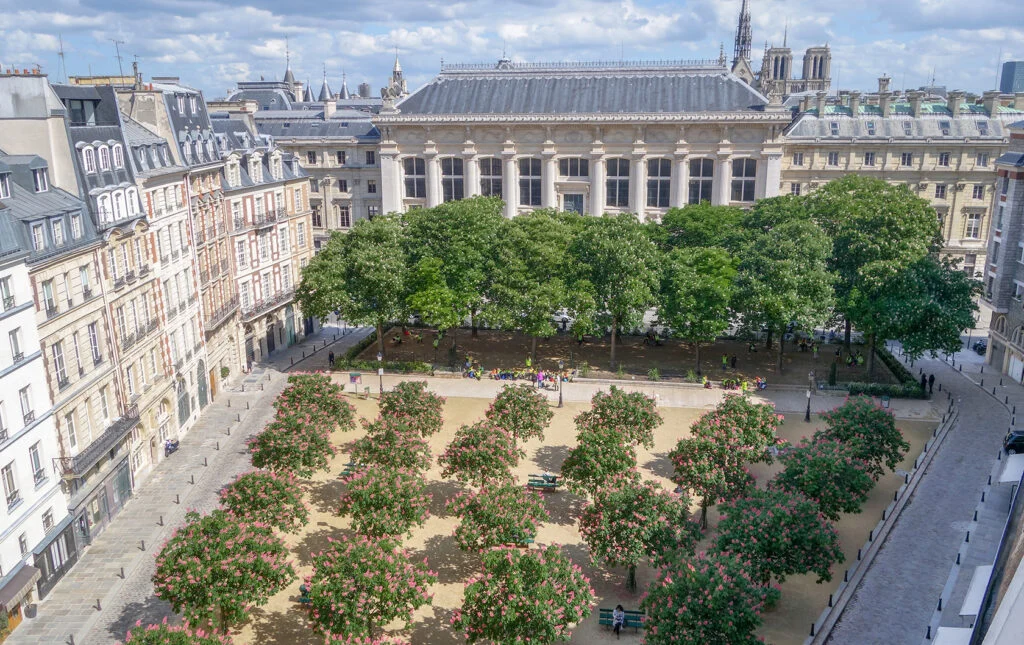
This historic square offers a quiet space to reflect on the surrounding royal architecture after exploring the nearby monuments.
The sites operate on a consistent daily schedule throughout the week.
The Conciergerie and Sainte-Chapelle are located at 10 Boulevard du Palais, 75001 Paris, France, situated on the Île de la Cité. The most efficient way to reach this site is via the Paris Métro or RER train network.
Line 4 to Cité station
Line B or C to Saint-Michel Notre-Dame
Lines 21, 27, 38, or 85 to Cité - Palais de Justice
Drop-off at Boulevard du Palais
For a smooth experience, the best arrival window is 09:00–16:15 to avoid mid-day crowds and ensure you have sufficient time for your visit before last entry.
To experience these sites with fewer crowds, the best arrival window is 09:00–16:15. Arriving early in the day or during shoulder seasons helps avoid peak mid-day congestion.
—
Visiting early on weekdays allows for a more focused experience at both locations.
Cold, average 5°C to 9°C
Lower visitor numbers during these months provide a quieter atmosphere.
Mild, average 11°C to 16°C
These months offer a balance of manageable crowd sizes and comfortable walking temperatures.
—
Expect significant wait times and larger crowds during this period.
Verdict: The best time to visit is Tuesday to Thursday, arriving at 09:00, during the months of April or October.
Everything you need to know about what is the conciergerie at sainte chapelle
The Conciergerie is a historic monument and former royal residence that served as a prison during the French Revolution. It sits on the Île de la Cité, geographically linked to the neighboring Sainte-Chapelle as part of the original Palais de la Cité. While they function as distinct museums today, they represent the administrative and religious history of the same royal palace. Many visitors ask what is the conciergerie at sainte chapelle to understand the connection between these two medieval power centers.
While they are separate monuments, they are both part of the Palais de la Cité complex. You will find that what is the conciergerie at sainte chapelle refers to two distinct but adjacent experiences within the same historic precinct. Most visitors explore both on the same day to gain a fuller picture of French royal history.
Visiting both sites provides a contrast between the spiritual majesty of Sainte-Chapelle and the sober, administrative, and prison-based history of the Conciergerie. Understanding what is the conciergerie at sainte chapelle helps guests appreciate how the French monarchy functioned in both sacred and secular roles. This dual visit is highly recommended for those interested in medieval statecraft and revolutionary history.
Yes, these are managed as two separate sites, and you typically require tickets for both if you intend to visit each monument. While they are located very close together, they have separate security entrances for visitors. Plan your visit accordingly to ensure you have valid entry for both locations.
The Conciergerie offers accessible routes for visitors with reduced mobility to explore its historic halls and revolutionary-era cells. It is recommended to check the official site for specific accessibility pathways to ensure a smooth visit through the monument. This allows everyone to explore the legacy of the Palais de la Cité.
The best arrival window is 09:00–16:15 to avoid mid-day crowds and ensure full visit time before last entry. Arriving early helps you avoid the security lines that can build up during the day. Following this window ensures you have enough time to experience both landmarks properly.