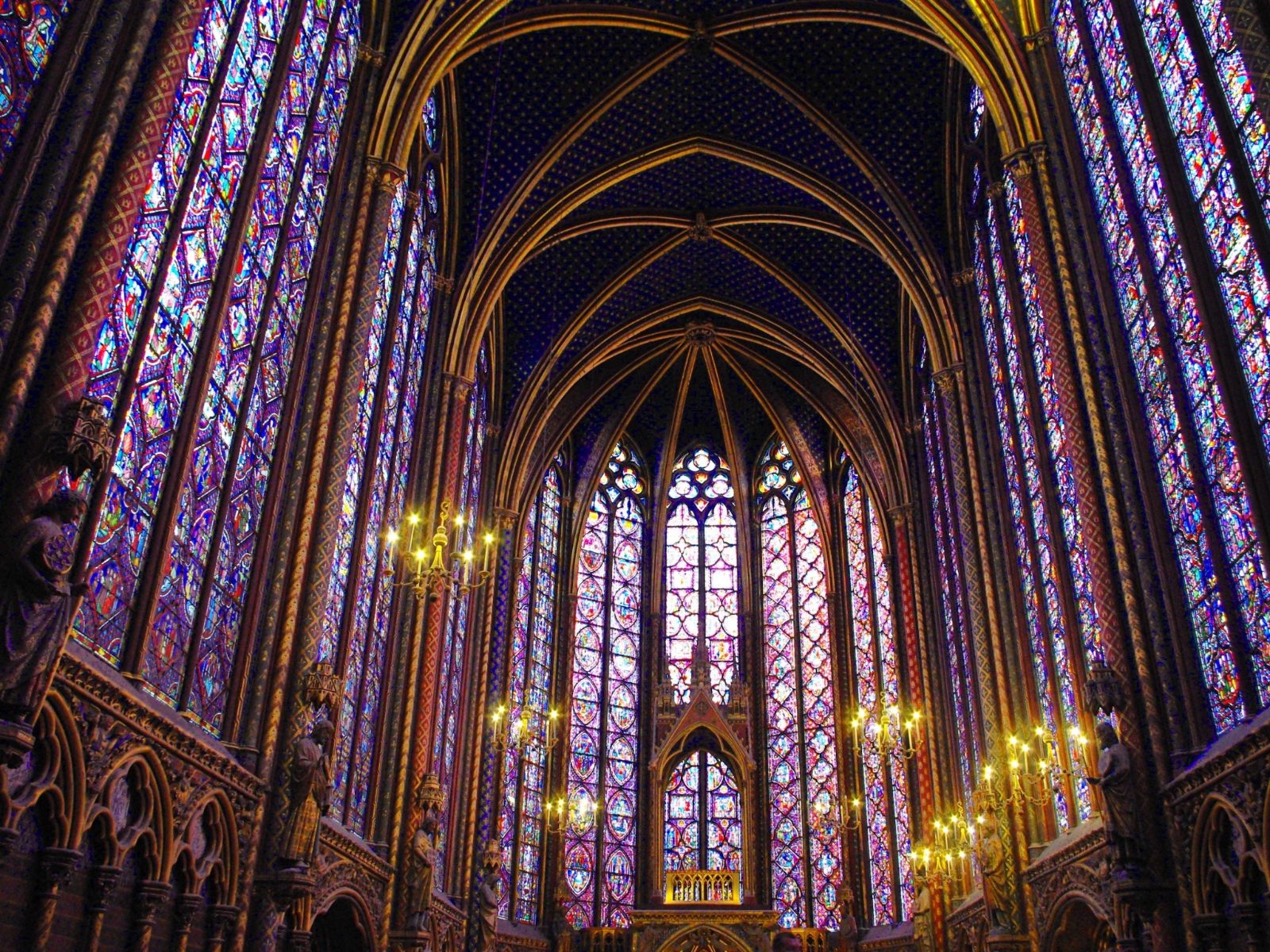
The Upper Chapel
The central space features 1,113 stained glass scenes depicting narratives from the Old and New Testaments.
Stand near the rear wall to capture the full panoramic view.
Sainte-Chapelle draws visitors for a single architectural achievement that has survived nearly 800 years intact. Built as a reliquary chapel for France's royal palace, it holds one of the world's most complete ensembles of medieval stained glass. Understanding what makes this monument significant helps travelers prioritize their time on Île de la Cité.
Quick answer
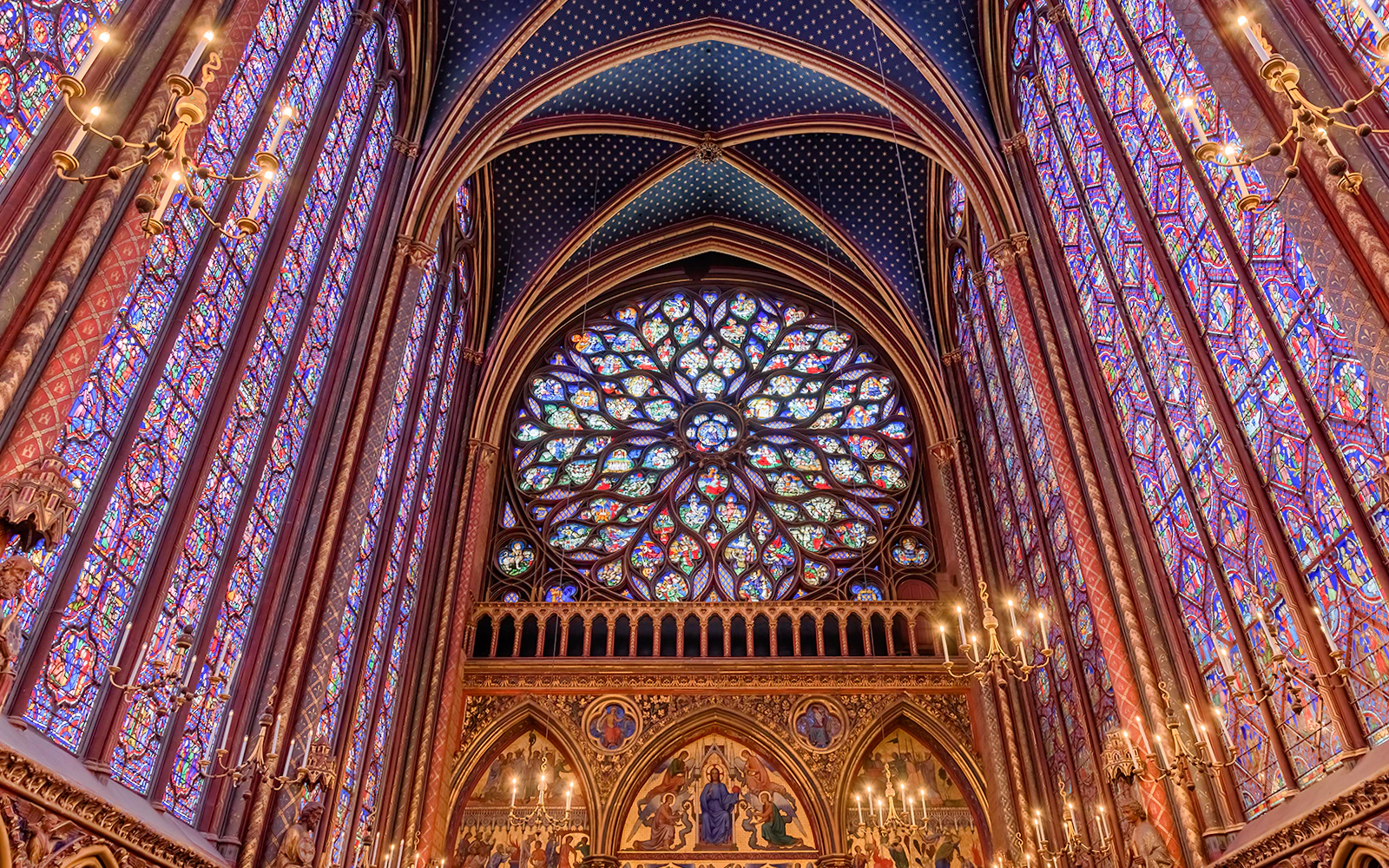
Sainte-Chapelle is famous for its 15 monumental stained glass windows, which cover 670 square meters and depict 1,113 biblical scenes from Genesis to the Resurrection. Commissioned by King Louis IX in 1248 to house Christ's Crown of Thorns and other Passion relics, the chapel represents the pinnacle of Rayonnant Gothic architecture, where stone structure dissolves into walls of colored light.
Two-thirds of the stained glass you see in the upper chapel is original 13th-century work, a survival rate unmatched by any Gothic monument of comparable scale. The 15 lancet windows rise 15 meters and wrap the chapel in a continuous narrative Bible, designed to be read like illuminated manuscripts by courtiers who attended Mass here. The rose window alone contains 86 panels illustrating the Apocalypse of Saint John. What is Sainte Chapelle famous for beyond its windows is the architectural audacity that made them possible. Pierre de Montreuil reduced the stone walls to slender piers and iron armatures, allowing glass to occupy nearly 80 percent of the upper chapel's surface. The result is a reliquary casket in architectural form, built at a cost exceeding the chapel's own construction to house fragments of the True Cross and the Crown of Thorns, which Louis IX acquired for 135,000 livres—three times what he spent erecting the building. The original Gothic spire, destroyed by fire in 1630, soared 75 meters and made the chapel visible across medieval Paris. Visitors encounter the structure in two stages. The lower chapel, built for palace staff, retains its polychrome decoration and displays the building's loadbearing logic. A narrow spiral stair leads to the upper chapel, the king's private oratory, where light transforms stone into something weightless. The nave measures just 17 meters wide but feels vast because the eye registers color and luminosity rather than enclosing walls. Most travelers spend 30 to 45 minutes inside, though photography rarely conveys the chromatic intensity of standing beneath the windows when afternoon sun passes through the southern bays. The chapel's context matters. It sits within the Palais de la Cité, the medieval seat of French royal power, now integrated into the 19th-century Palais de Justice. Security screening at the entrance serves the active courthouse, not the monument itself. The Conciergerie, the palace's surviving medieval hall and Revolutionary prison, shares the same island and makes a logical pairing for visitors interested in the full arc of Parisian institutional history. Both sites open at 9:00 and close at 17:00, seven days a week, with last entry 40 minutes before closing.
“Two-thirds of the stained glass in the upper chapel is original 13th-century work, a survival rate unmatched by any Gothic monument of comparable scale.”
Sainte-Chapelle is primarily recognized for its 13th-century stained glass program, which occupies nearly the entire wall space of the upper chapel. This skeletal Gothic architecture creates a translucent enclosure that filters light through thousands of individual glass panels.
The central space features 1,113 stained glass scenes depicting narratives from the Old and New Testaments.
Stand near the rear wall to capture the full panoramic view.
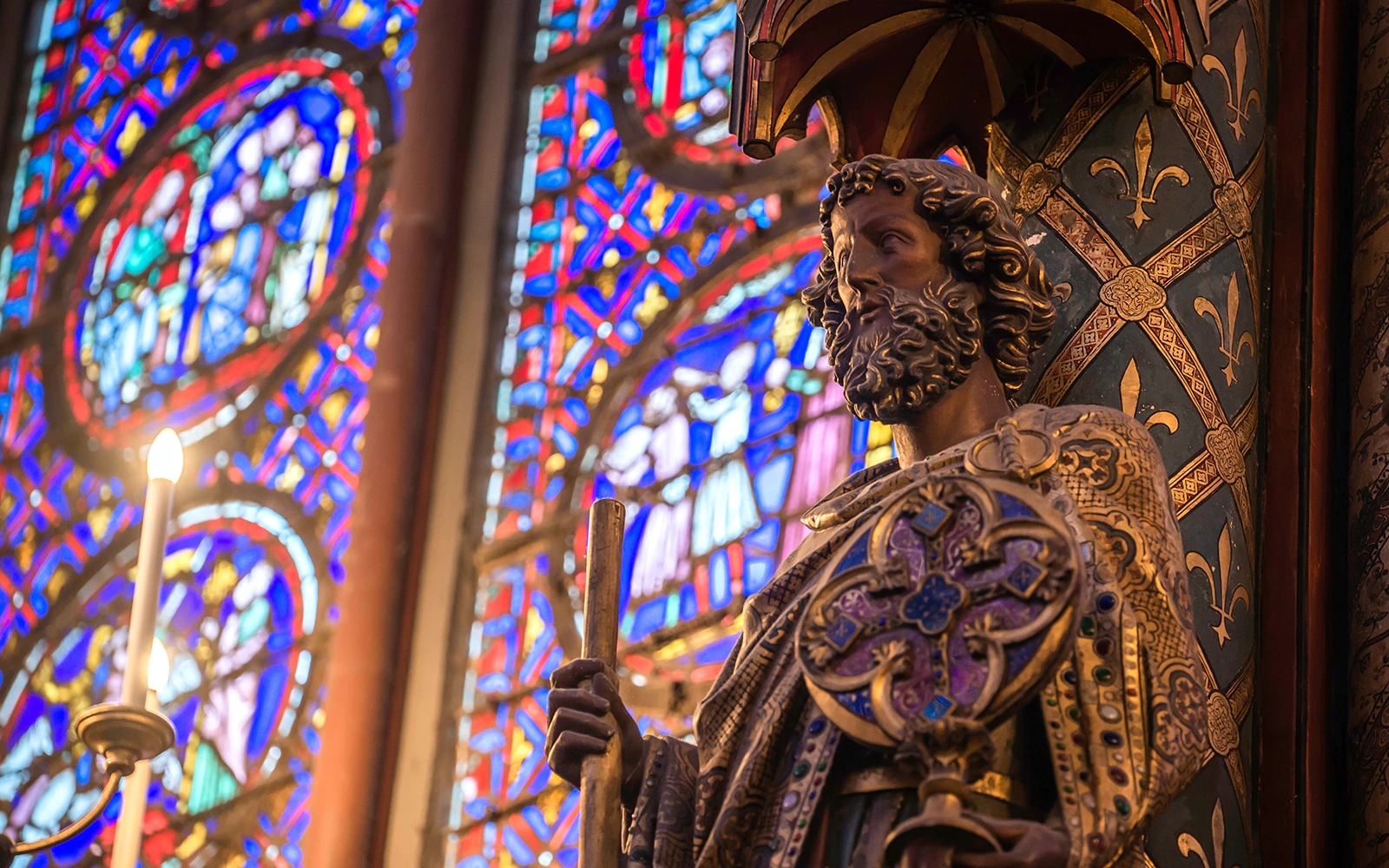
Twelve stone statues representing the Apostles are positioned between the window bays.
Look for the distinct painted symbols on their robes.
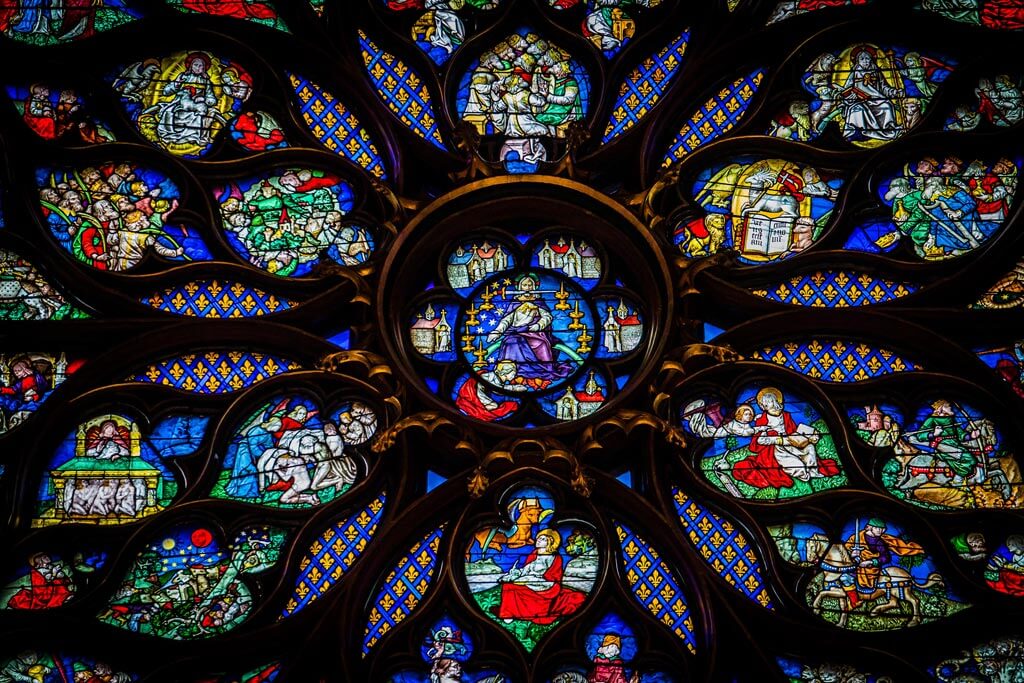
Located on the western wall, this intricate flamboyant Gothic masterpiece depicts the Book of Revelation.
Visit during the late afternoon when sunlight illuminates the colors.
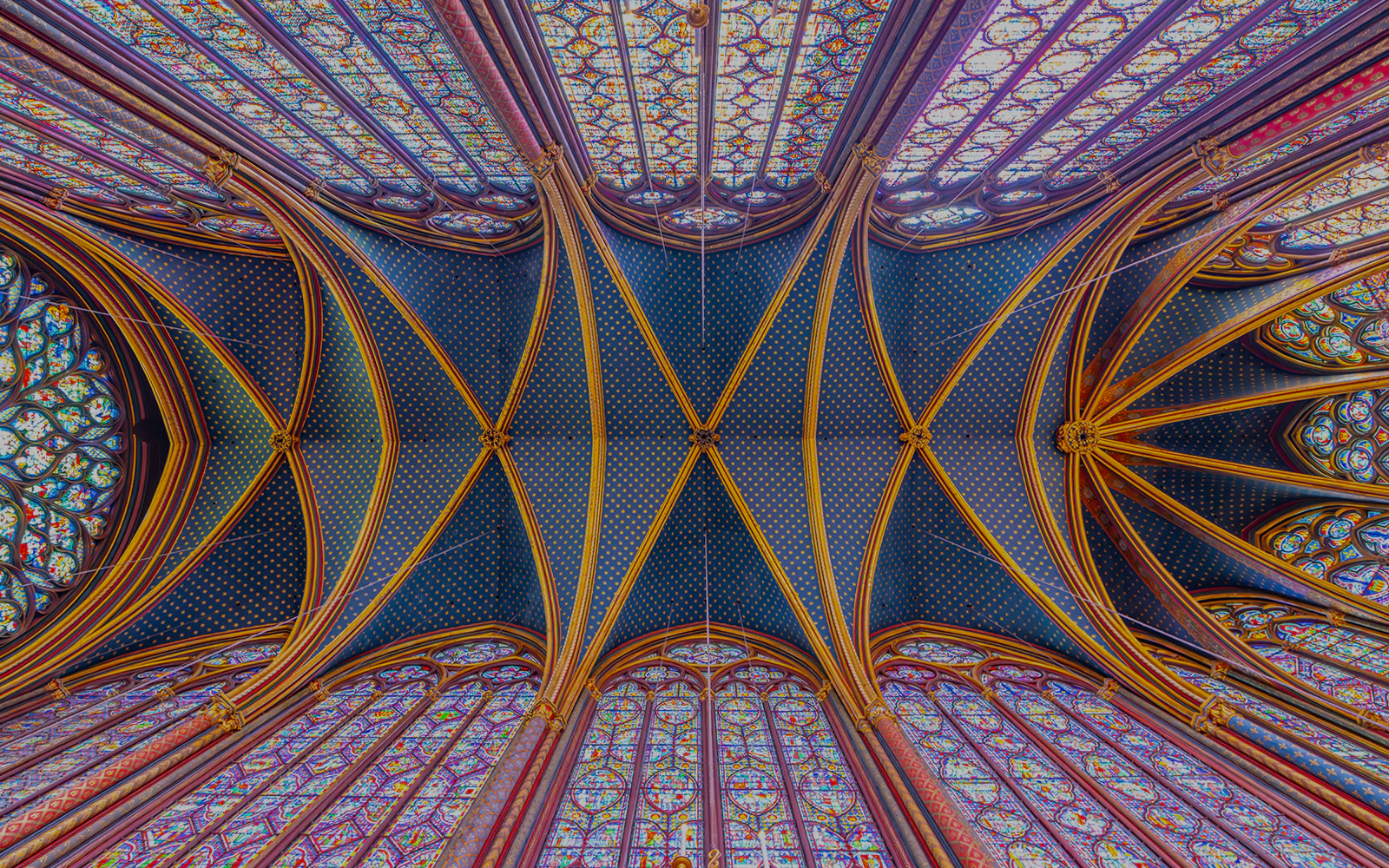
The ceiling is painted with gold stars against a deep blue background to represent the heavens.
Use a camera zoom to examine the detailed star motifs.
King Louis IX commissioned Sainte-Chapelle in 1238 to serve as a monumental reliquary for the Crown of Thorns and fragments of the True Cross, relics he had purchased from the Latin Emperor of Constantinople for a sum that exceeded the chapel's construction cost. The transaction reflected both the political ambition of the Capetian monarchy and the era's fervent devotion to physical contact with sacred objects. Construction began in 1241 under architect Pierre de Montreuil, and the chapel was consecrated in April 1248, an exceptionally swift timeline for a structure of such complexity. What is Sainte-Chapelle famous for in medieval history centers on its dual function as royal chapel and relic shrine. Louis IX, later canonized as Saint Louis, intended the building to position Paris as a new Jerusalem and the French crown as Christendom's spiritual guardian. The two-tiered design placed the Passion relics in the Upper Chapel, accessed only by the royal family and select clergy, while the Lower Chapel served the palace household. This spatial hierarchy materialized the divine right of kings in stone and glass. The French Revolution dismantled the chapel's sacred purpose. Revolutionary forces removed the relics in 1791, melting down the Grande Châsse—a gilded shrine that had held the Crown of Thorns—for its precious metals. The building became an administrative archive, its interior subdivided by wooden floors. Architect Eugène Viollet-le-Duc led restoration efforts between 1845 and 1867, removing post-medieval additions and reconstructing the flèche that had been dismantled in 1793. Visitors today encounter the restored 13th-century shell, its fifteen lancet windows intact, but the relics that justified its construction now reside in Notre-Dame's treasury. The empty reliquary platform in the Upper Chapel marks the absence at the heart of what Sainte-Chapelle was famous for: a king's ambition rendered in light and stone.
King Louis IX commissions Sainte-Chapelle to house the Crown of Thorns and fragments of the True Cross purchased from Baldwin II of Constantinople.
Construction begins under architect Pierre de Montreuil, financed by the Capetian treasury.
The chapel is consecrated on 26 April in the presence of Louis IX, completing seven years of construction.
Revolutionary authorities remove the Passion relics and dismantle the Grande Châsse for its gold and silver content.
The building is repurposed as an archive for judicial records, with wooden floors subdividing the interior space.
Eugène Viollet-le-Duc restores the chapel, reconstructing the flèche and removing post-medieval alterations.
The optimal time to experience the stained glass is during the morning hours, when light enters the upper chapel at an angle that enhances the color saturation of the glass. Arriving during the best arrival window of 09:00–10:30 minimizes wait times while providing clear visibility of the interior.
—
Reduced wait times and fewer visitors in the chapel allow for quiet observation of the glass panels.
Mild temperatures 12°C–20°C
Longer daylight hours provide consistent lighting conditions for viewing the architectural details.
Cooler temperatures 10°C–18°C
Lower sun angles often create distinct light patterns across the floor of the upper chapel.
Warm temperatures 18°C–25°C
Peak tourism levels mean lines are longer, requiring arrival at opening time for a smoother visit.
Verdict: The best slot is Tuesday to Thursday, arriving at the 09:00 opening time during the months of April or October.
Sainte-Chapelle is open to visitors every day of the week. The site maintains consistent operating hours throughout the year.
Sainte-Chapelle is located at 10 Boulevard du Palais, 75001 Paris, France, situated within the medieval Palais de la Cité on the Île de la Cité. The most efficient way to reach this central location is by utilizing the Paris Metro or RER network.
Line 4 to Cité station
Line B or C to Saint-Michel Notre-Dame
Lines 21, 27, 38, or 85 to Cité - Palais de Justice
Visitors should be aware that accessing the chapel requires navigating 33 steps. To ensure a smooth entry and avoid the longest queues, plan your arrival between 09:00 and 10:30.
Everything you need to know about what is sainte chapelle famous for
Sainte-Chapelle is famous for its extensive collection of 13th-century stained glass windows, which depict over 1,100 biblical scenes. These windows constitute one of the most complete ensembles of their kind in the world. Many travelers wonder what is sainte chapelle famous for, and the answer lies in its unique Rayonnant Gothic architecture. This historic site remains a highlight of any Paris landmark exploration.